
Simon Says: A CPA Matters for Your Business
Finding the right accountant for your business is crucial. Whether you’re an individual filing a tax return or a business owner needing reliable financial statements, knowing how to find a real CPA near you — and verify their credentials — can protect you from costly mistakes. Not all accountants are CPAs, and not all tax preparers are regulated professionals. Here’s how to make sure you’re working with a qualified Chartered Professional Accountant (CPA) in Ontario — and why that distinction matters. What Is a CPA — and Why It’s Different From a Tax Preparer? A CPA (Chartered Professional Accountant) is a licensed professional regulated by CPA Ontario. These regulation exists to protect the public.
To earn and maintain the CPA designation, members must complete:
- A Canadian university degree
- The CPA Professional Education Program (PEP)
- Extensive supervised practical experience
- Ongoing annual professional education and practice inspections
- Strict ethical and professional standards
In contrast, a non-CPA tax preparer:
- Is not regulated by CPA Ontario
- Is not required to meet professional education standards
- Is not authorized to issue formal financial statements for third parties
How to Verify a CPA in Ontario (Step-by-Step)
Step 1: Verify a CPA Firm
If you’re hiring an accounting firm, you can confirm it’s a registered CPA firm using the CPA Ontario Firm Directory: https://www.cpaontario.ca/protecting-the-public/directories/firm
This registry allows you to verify the firm’s legal name, location and contact details and whether the firm is currently in good standing. If a firm is not listed, it is not authorized to offer CPA public accounting services.
Step 2: Verify an Individual CPA
If you’re hiring an individual accountant, use the CPA Ontario Member Directory: https://www.cpaontario.ca/protecting-the-public/directories/member
You can confirm whether the person is a CPA, their current membership status, and any disciplinary history This ensures you’re dealing with a licensed professional, not just someone using the word “accountant.”
What a CPA Can Do That a Non-CPA Cannot
Many people assume all accountants offer the same services — but the difference is significant.
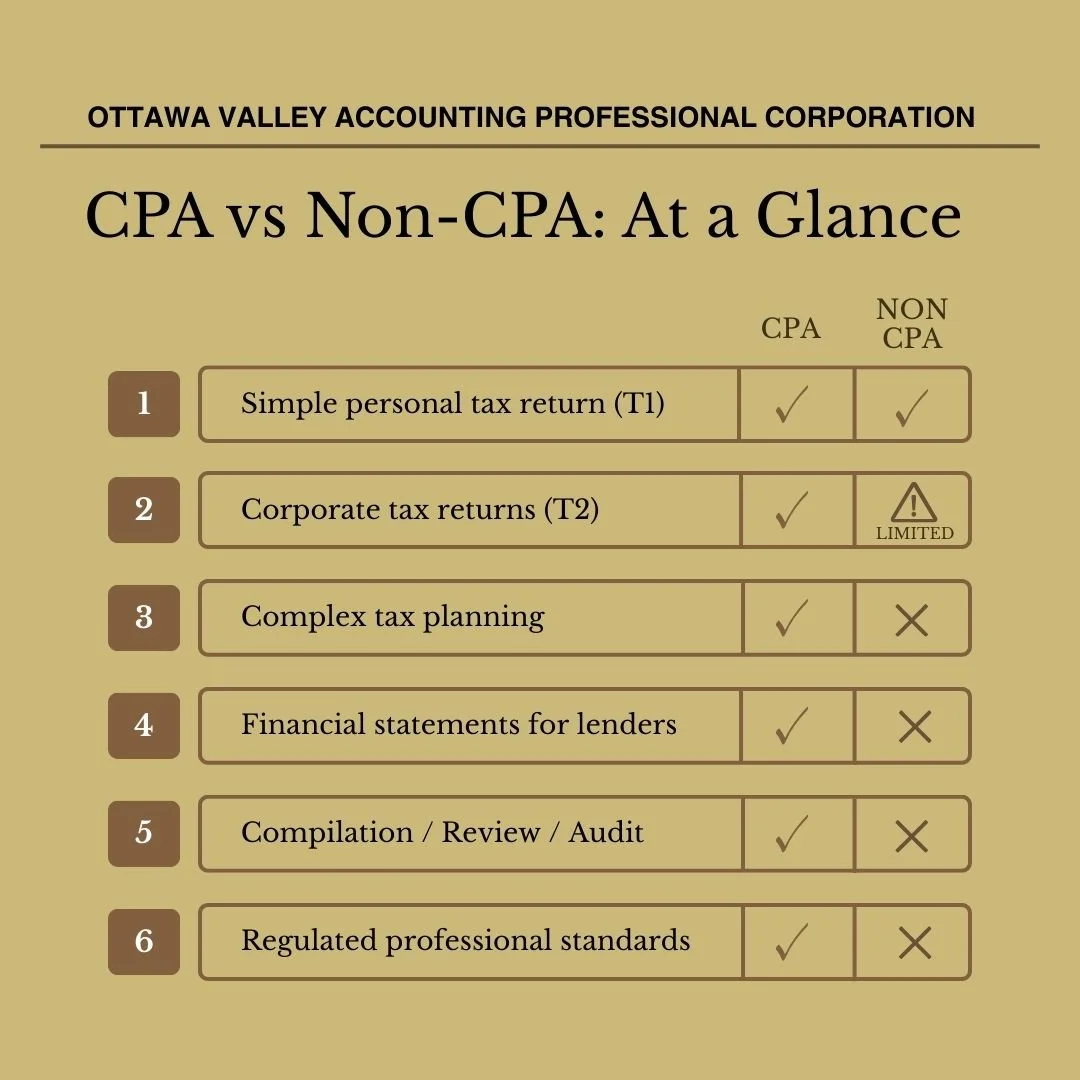
A non-CPA may be able to: prepare simple personal tax returns (T1), prepare simple corporate tax return (T2), and handle very basic bookkeeping. However, they cannot issue financial statements relied on by banks or investors, perform compilation (formally notice to readers), review, or audit engagements, and provide advanced tax planning or corporate restructuring advice.
A CPA is qualified to prepare corporate tax returns (T2), provide advanced tax planning, prepare financial statements for third-party use, perform compilation engagements, reviews, and audits, and advise on business growth, structure, and compliance
This matters when your financials are being used by:
- Banks and lenders
- Investors
- Government agencies
- Buyers or partners
How to Choose the Right CPA Near You
Once you’ve verified credentials, consider these factors:
1. Experience With Your Situation
Look for a CPA who works with:
Small businesses
Corporations
Professionals
Your specific industry
2. Clear Communication
A good CPA explains:
What they’re doing
Why it matters
How it affects your business or taxes
3. Proactive Advice
The right CPA helps you:
Plan ahead
Reduce tax exposure
Avoid compliance issues before they happen
Final Thoughts
Choosing an accountant is more than finding someone to “file taxes.” Not all accountants are CPAs — but all CPAs are accountants. Verifying your accountant through the CPA Ontario registry ensures:
Professional accountability
Proper authorization
Financial statements you can rely on
If your finances matter — and they do — choosing a CPA is one of the smartest decisions you can make.
